Every winter, La Crosse temperatures plunge toward -20°F, and every winter, the pipes that freeze are almost always the same ones: the run through the unheated crawl space, the supply line in the exterior wall behind the kitchen sink, the spigot line nobody shut off in October. Frozen pipes burst because ice expands and pressure has nowhere to go — and when that pressure finds a weak spot, you get a flood. The good news: preventing frozen pipes is mostly a matter of preparation, not luck. This checklist covers the steps that actually work in a La Crosse winter, in the order to tackle them.
1. Insulate Exposed Pipes in Cold Spaces
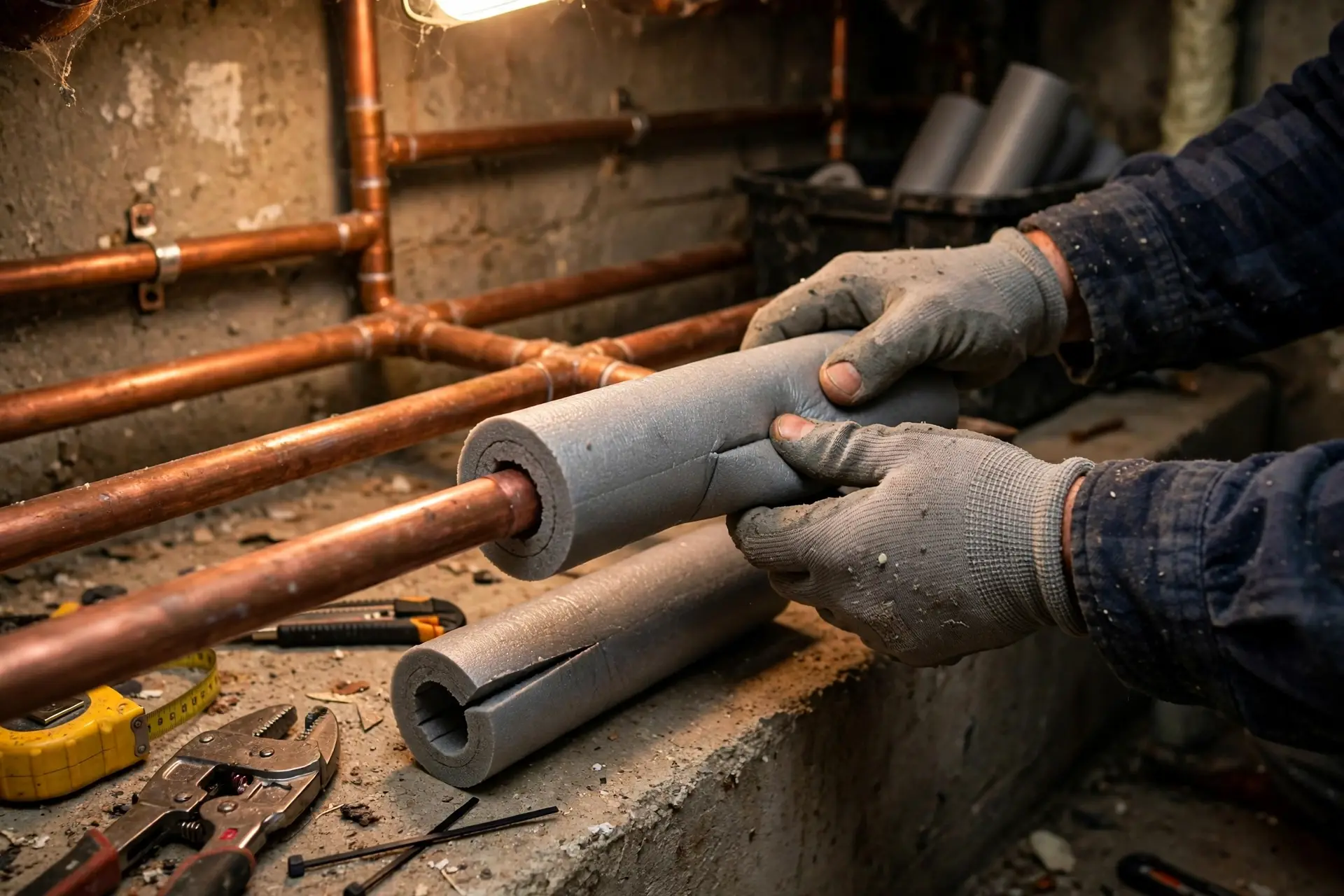
Walk your basement, crawl space, garage, and any unheated utility area and look for bare pipe — supply lines, drain runs, and especially elbows and fittings, which freeze first. Foam pipe sleeves are inexpensive and slide on in minutes; for the most vulnerable runs, electric heat tape provides active protection. Pay special attention to pipes along exterior foundation walls and anywhere the line passes near a vent or draft. If a pipe froze and split last year, that run needs insulation before November, not a hope that this winter will be milder. Our frozen pipe burst cleanup guide shows what these overlooked runs look like after they fail — and why insulation is always the cheaper lesson.
2. Let Faucets Drip During Deep Cold
When the forecast shows sustained cold below zero, let faucets fed by exterior-wall plumbing drip — just a thin, steady trickle. Here is why it works: the pressure from expanding ice is what splits pipes, not the ice itself. A dripping faucet relieves that pressure and keeps water moving, which makes freezing much harder. Focus on the fixtures most at risk: kitchen sinks on outside walls, bathroom faucets far from the furnace, and any tap that has frozen or slowed in past winters. Catch the drip in a bucket if you want to reuse it — the point is flow, not waste.
3. Open Cabinet Doors on Exterior Walls
The warm air from your furnace never reaches the pipes if a closed cabinet door is blocking it. During extreme cold, open the cabinet doors under sinks on exterior walls so room heat can circulate around the supply lines and traps. This is one of the simplest steps on the list and one of the most skipped. If you have small children or pets, move any cleaning chemicals out of those cabinets first.
4. Seal Drafts Around Plumbing Penetrations
Pipes usually freeze where cold air reaches them, not where the pipe is inherently weak. Check where water lines enter the house — the gap around the main entry, hose bibs, dryer vents, and the rim joist in the basement. Caulk, expanding foam, or simple weatherstripping at these spots cuts the wind chill that accelerates freezing. In older La Crosse homes, the sill plate above the foundation is a notorious draft source; a tube of caulk there can protect an entire run of basement plumbing.
5. Keep the Thermostat Steady — Day and Night
Furnaces that are set back aggressively overnight let wall cavities cool to dangerous levels by morning — exactly when pipes are coldest. During a deep freeze, keep the thermostat at a steady temperature around the clock rather than dropping it at night. If you leave town in winter, never set it below 55°F, and for longer trips, shut off the main water valve and drain the lines entirely. A burst pipe with nobody home for a week is the worst-case scenario: water runs until someone notices.
6. Disconnect and Shut Off Exterior Lines
Garden hoses left attached to outdoor spigots trap water in the line all winter, and that ice backs right into the house. Disconnect every hose in the fall. If your outdoor spigots have interior shutoff valves, close them and drain the lines. Frost-free hose bibs help, but only if the hose is detached — an attached hose defeats the design. This one step prevents a surprising share of winter bursts we see each season.
7. Know Your Main Shutoff Before You Need It
Prevention fails sometimes, and when it does, speed is everything. Make sure everyone in the household knows where the main shutoff is — basement or utility room where the line enters the foundation, or near the water heater in slab homes — and how to turn it. A stuck valve is useless in an emergency, so test it once a year: turn it off, verify the water stops, and turn it back on. If the valve is corroded or will not budge, have it replaced before winter. When prevention fails, our emergency burst pipe cleanup crews are available 24/7, and homes up on the bluffs face the same risk — see our Grandad Bluff burst pipe cleanup page for area-specific guidance.
What to Do If Prevention Fails
Even with every precaution, a record cold snap can beat good plumbing — especially in older homes. If you find a frozen pipe, shut off the water first, then deal with the ice; thawing before the shutoff is off can turn a frozen pipe into a gushing one the moment the blockage clears. And if a pipe has already burst, you need extraction and drying, not just a plumber — water in walls and flooring is a cleanup job. Our frozen pipe burst cleanup service connects you with crews that handle exactly this situation, day or night.
Frequently Asked Questions
At what temperature do pipes freeze in La Crosse?
Exposed pipes in unheated spaces can freeze when temperatures drop into the teens, and prolonged cold below zero — common in La Crosse — can freeze pipes inside poorly insulated walls. Wind chill on the north side of a house accelerates the process.
Does letting faucets drip really prevent frozen pipes?
Yes, for pipes most at risk. A slow drip relieves pressure in the line, and it is pressure from expanding ice — not the ice itself — that usually splits the pipe. Drip faucets fed by exterior-wall plumbing during deep cold snaps.
Should I turn off my water if I leave town in winter?
Shut off the main valve and drain the lines before a long winter trip — a burst pipe with nobody home is the worst-case scenario. Keep the thermostat no lower than 55°F so the furnace keeps the structure warm while you are away.
Is pipe insulation worth it in an older La Crosse home?
Absolutely. Older homes near the river and on the bluffs often have plumbing in unheated crawl spaces and exterior walls that were never designed for -20°F. Foam sleeves and heat tape on those runs are among the cheapest defenses available.
A November afternoon of insulation, caulking, and shutoff testing beats a January morning of standing water. But if the cold wins anyway, do not wait — call (608) 817-7864 and we will connect you with a local crew immediately. Learn more about frozen pipe burst cleanup before the deep cold arrives.