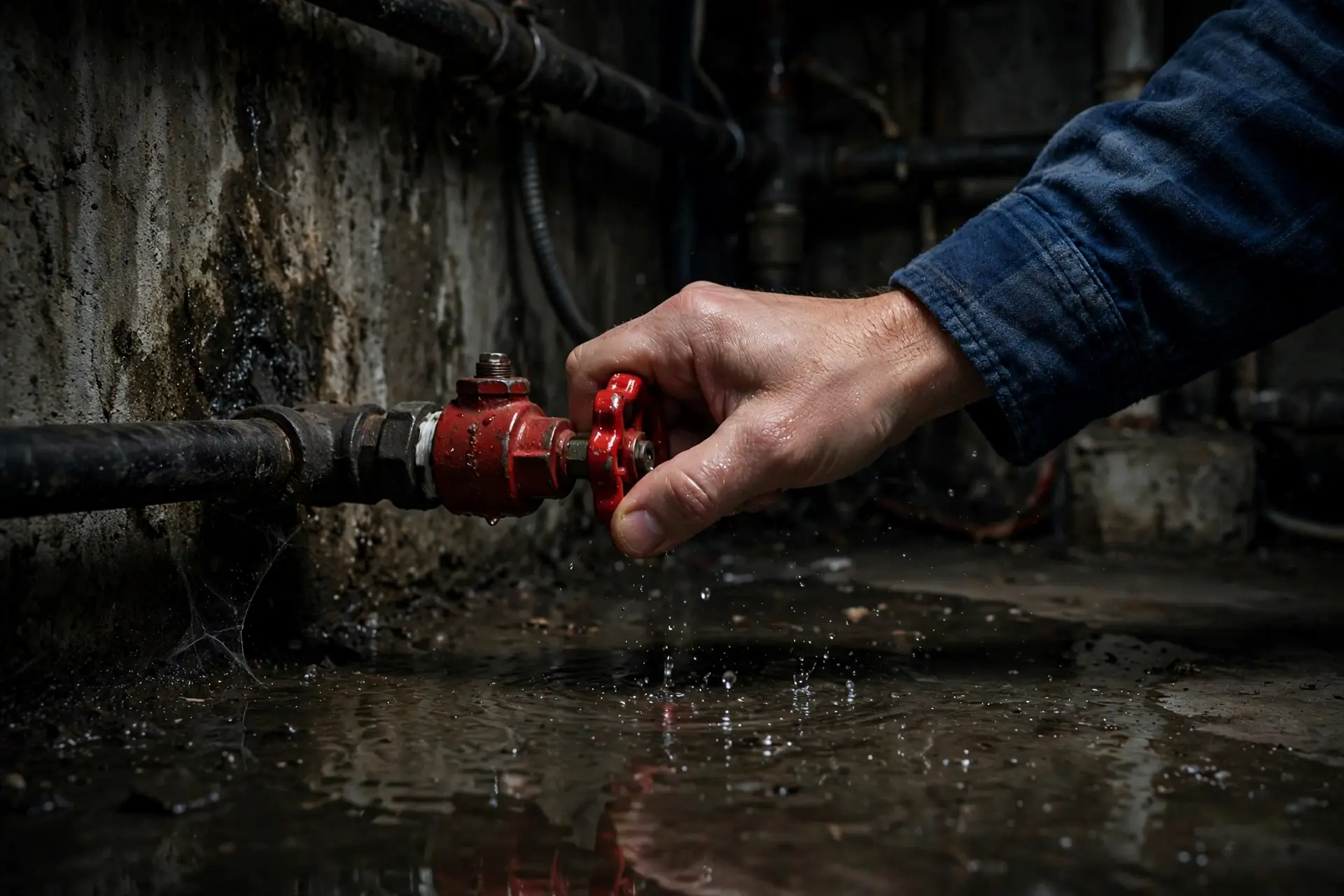
Discovering water pouring from a burst pipe is one of the worst surprises a La Crosse homeowner can get — especially in January, when temperatures across the Coulee Region can plunge toward -20°F and a single frozen section of pipe can flood a basement, kitchen, or crawl space in minutes. What you do in the first hour matters more than anything that comes after. Fast action limits the water, protects your belongings, and gives the drying equipment a head start before moisture settles into walls and flooring. This guide walks you through exactly what to do when a pipe bursts, in the order that keeps you safe and keeps the damage contained.
Step 1: Shut Off the Water at the Main Valve
Your main shutoff valve is the single most important fixture in the house during a burst. In most La Crosse homes you will find it in the basement or utility room, where the water line enters through the foundation wall; in homes built on slabs, it may be near the water heater or inside a utility closet. Turn it clockwise until it stops — gate valves take several turns, while modern ball valves need just a quarter turn. Do not waste time hunting for a fixture-level shutoff if water is spreading; kill the whole supply first and sort out details later.
Once the main is off, open the cold-water faucet on the lowest level of the house and let the line drain. This relieves pressure in the burst section and buys time until help arrives. If your pipe froze before it burst, the ice blockage and pressure spike are the real culprits — our guide to frozen pipe burst cleanup explains what happens inside the pipe wall and what a cleanup crew checks once the water is off.
Step 2: Make the Area Safe Before You Wade In
Water and electricity are a dangerous combination, and burst pipes often spray across ceilings, light fixtures, and outlets. If water is pooling anywhere near outlets, appliances, your furnace, or the breaker panel, stay out of the water and cut power to the affected area at the breaker box — or the whole house if you are unsure. Never touch a breaker panel while standing in water; if the panel itself is wet, leave it alone and wait for help.
Keep family members and pets clear of the wet zone until it is de-energized. A burst on an upper floor is especially urgent: water travels down through ceilings and wall cavities, so a kitchen flood can become an electrical hazard in the basement below before you realize it.
Step 3: Open Faucets and Contain the Water
With the main off, open every cold-water faucet in the house, starting with the lowest. Cold lines feed from the bottom up, so opening low faucets drains the system fastest and stops pressure from forcing more water out of the break. Then work on containment: throw towels or old blankets around the base of the leak to slow the spread, and if the burst is behind a wall or ceiling, puncture a small hole in any bulging drywall with a screwdriver and catch the flow in a bucket — a controlled drip beats a ceiling collapse.
For fast, professional help, our emergency burst pipe cleanup service connects you with La Crosse crews that arrive with pumps and commercial extractors rather than shop vacs, so the water comes out in hours, not days.
Step 4: Move Belongings and Start Removing Water
Get furniture, rugs, electronics, and anything with sentimental value out of the wet area — start with items sitting directly on the floor, since moisture wicks upward fast. Lift what you cannot move: slide aluminum foil or wood blocks under furniture legs to keep them out of standing water. If the water is shallow, a wet/dry vacuum can pull it up, but stop if the unit is struggling — deep water over carpet or in a finished basement is a job for truck-mounted extraction.
Resist the urge to open windows to "air it out." In a La Crosse winter, outside air is far colder than your interior, and opening windows can refreeze wet plumbing and make the damage worse. Containment first, drying later.
Step 5: Photograph Everything for Your Insurance Claim
Before you move or clean too much, document. Take wide photos of every affected room, close-ups of the burst section of pipe, and shots of water lines on walls, wet flooring, and damaged belongings. Then take video: walk the house slowly and narrate what you are seeing and where the water came from. Save samples of damaged materials you remove — a section of ruined carpet or a warped baseboard helps an adjuster verify the claim.
Keep every receipt from this point forward: towels, dehumidifier rental, and especially the cleanup invoice. Insurers draw a sharp line between sudden, accidental damage and damage that worsened because the homeowner waited, so the timestamps on your photos are your best friend. Our full breakdown of whether insurance covers burst pipe damage walks through what to file and how.
Step 6: Get a Cleanup Crew on the Way
Burst pipe cleanup is not just mopping up. Water hides inside wall cavities, under flooring, and behind baseboards, and in a La Crosse winter the instinct to seal the house tight and crank the heat can trap moisture exactly where mold wants it. Professional crews use moisture meters and thermal cameras to find what you cannot see, then place industrial air movers and dehumidifiers to dry the structure to measured targets — not just until it "looks dry." The sooner extraction starts, the shorter the drying cycle and the smaller the repair footprint.
Homes across the downtown area — from the older housing stock near the river to newer builds by the bluffs — share the same winter risk: plumbing in exterior walls and unheated spaces. If you are in the downtown area, see our downtown La Crosse burst pipe cleanup page for neighborhood-specific guidance, and do not wait until morning: every hour of delay adds a day of drying.
Frequently Asked Questions
Where is the main water shutoff in a typical La Crosse home?
Most La Crosse homes have the main shutoff in the basement or utility room, where the water line enters through the foundation wall. Homes built on slabs usually have it near the water heater or in a utility closet. Find yours before winter, not during a flood.
Should I try to thaw the pipe myself before calling for cleanup?
If you can safely shut off the water first, a gentle warm towel on a frozen — not burst — section is fine. Once a pipe has burst, thawing does nothing about the standing water. Extraction and drying are the priority, so get a cleanup crew on the way.
How fast does mold grow after a pipe burst?
Mold can begin colonizing wet drywall and wood within 24 to 48 hours. That is why professional drying targets measured moisture levels with meters, rather than waiting for surfaces to look dry.
Will my homeowners insurance cover the cleanup?
Most policies cover sudden and accidental water damage like a burst pipe, but not gradual leaks or damage that worsened because the homeowner delayed. Document everything, mitigate fast, and see our insurance guide for the full breakdown.
A burst pipe is a race against moisture. Shut off the water, make it safe, document everything, and get professionals extracting water within the hour. La Crosse Burst Pipe Cleanup connects you with independent local cleanup providers around the clock — call (608) 817-7864 now, or read more about our emergency burst pipe cleanup service before the next cold snap hits.